Cultural Timing Guides
Best Time to Contact Japan and Plan Across Global Cultures
International scheduling is not just time conversion. It is about respecting business hours, local customs, weekends, holidays, and the people behind every meeting invite.

What this guide answers
Better global scheduling starts with understanding people.
Learn when Tokyo business hours align best with US and European schedules, and how to avoid contacting Japan too early or too late.
Work hours around the worldCompare business-hour expectations across Japan, the United States, Europe, and other regions before sending an international invite.
Weekend differences globallyUnderstand why Friday, Saturday, and Sunday can affect international availability differently depending on the country and local workweek.
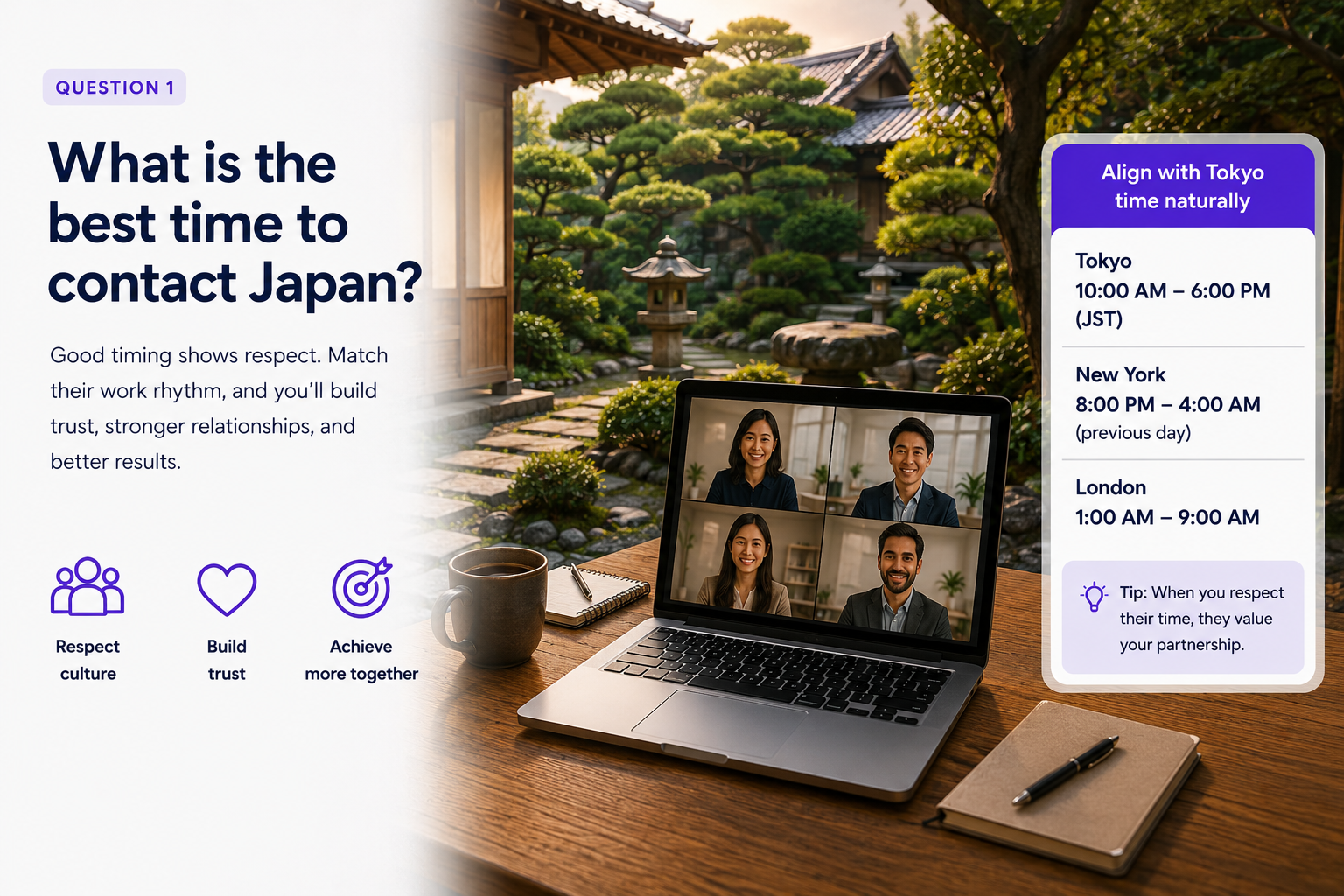
What is the best time to contact Japan?
The best time to contact Japan is usually during Tokyo business hours, especially mid-morning through late afternoon on a Japanese weekday. For most professional communication, aim for a window that lands somewhere between 9:00 AM and 6:00 PM in Japan.
The challenge is that Tokyo is far ahead of North America and several hours ahead of Europe. That means a good time in Japan may be late evening in the United States or very early in Europe.
For US teams, the most realistic Japan-friendly window is often evening in the US, which becomes the next business morning in Tokyo. For European teams, early morning in Europe may connect with late afternoon in Japan.
Global workday rhythm
How do work hours differ around the world?
Many countries use a familiar weekday business rhythm, but the expectations around meetings can be very different. Some cultures value punctual starts, some prefer planned agendas, and some avoid end-of-day meetings because they interfere with family or commute time.
A meeting that is technically inside working hours may still be a poor choice if it lands during lunch, local commute time, Friday afternoon, or the end of a regional workweek.
Strong global scheduling means looking at the human schedule: when people are working, when they are focused, and when a meeting would feel respectful.
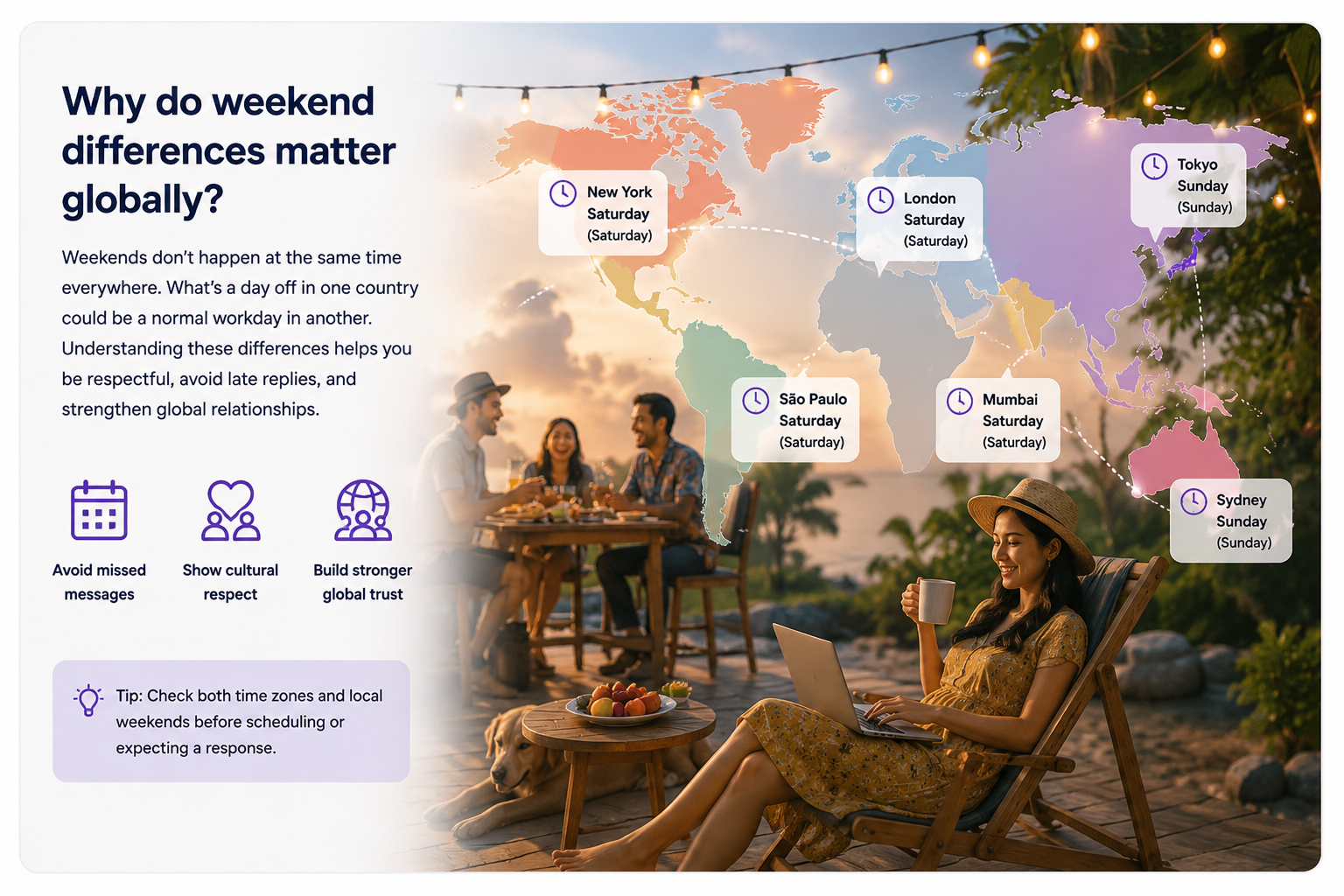
Why do weekend differences matter globally?
Weekend timing is one of the easiest global scheduling mistakes to miss. Many teams think of Saturday and Sunday as the weekend, but some regions have different workweek patterns or reduced business activity on Friday.
A Friday morning meeting in one country can land late Friday night somewhere else, or fall close to the start of a local weekend. For global launches, customer calls, or support handoffs, that can create missed responses and poor attendance.
Before scheduling international work, check both the clock and the local calendar.
Common cultural timing mistakes
Small timing mistakes can feel disrespectful across borders.
A US-friendly afternoon meeting can become early morning or late night in Japan depending on the cities involved.
Work hours, lunch breaks, commute patterns, and preferred meeting windows can differ by region.
A normal Friday meeting can be inconvenient or near-weekend timing for another country.
Quick answers
Cultural Timing FAQ
What time is best to contact Japan from the US?
For many US teams, evening in the United States can align with the next business morning in Tokyo. Always confirm the exact city and date.
What time is best to contact Japan from Europe?
Early morning in Europe may overlap with late afternoon in Japan, but the exact window depends on the countries and daylight saving time.
Why should global teams consider culture?
Because time zones tell you the clock time, but culture helps you understand whether that meeting time feels respectful and practical.
Plan respectfully
Compare cities before you contact global teams.
Use Best Meeting Time to check local times, avoid bad meeting windows, and schedule across cultures with more confidence.